The word “science” comes from the Latin word “scire,” which means “to know.” Related words include omniscience, which means all-knowing, and conscience, which means “with knowledge.” So – science means “to know,” which generally refers to knowing about the world around us. The exhibits at the World of Wonders Science Museum, whether for educational display or for hands-on interaction, are designed to foster a knowledge about, and an appreciation for the wonder of the world around us and how it works.
All of the WOW exhibits now have a permanent home in the museum thanks to the generous support of people like Jim Pyers and Uri Griner, who builds exhibits for the WOW, and other local donors who fund the purchase of new exhibits.
Check out some of the 70+ exhibits below!
Jim Pyers Illumination Lab Exhibits
Jim Pyers Illumination Lab is a dark room giving visitors the opportunity to explore the science of light with ten hand-on exhibits!
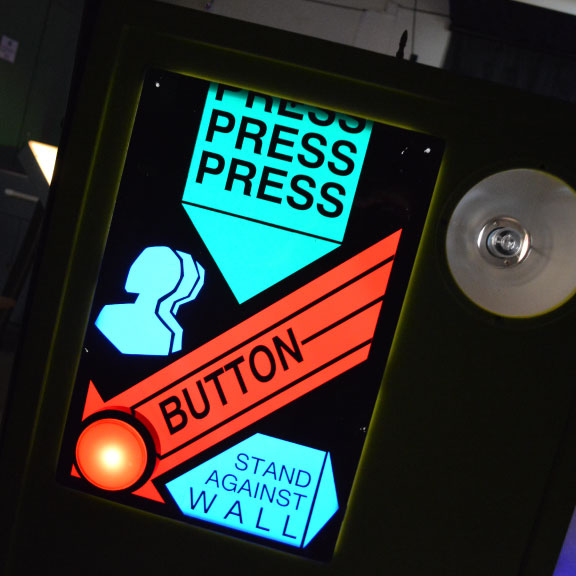
Shadow Wall- A large phosphor wall will store light from a strobe flash, temporarily freezing the visitor’s shadows. Visitors can stretch and pose before the strobe flashes to produce unique shadows.
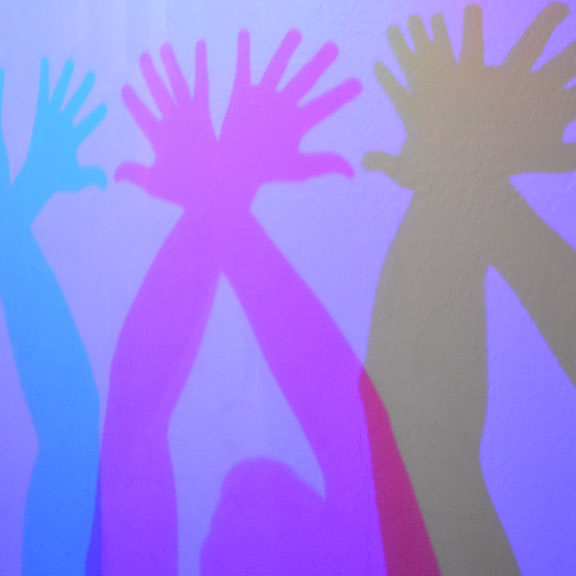
Colored Shadows- Red, blue and green spotlights shine on a wall while your body casts 3 different colored shadows. By moving your body, complimentary colors are produced.
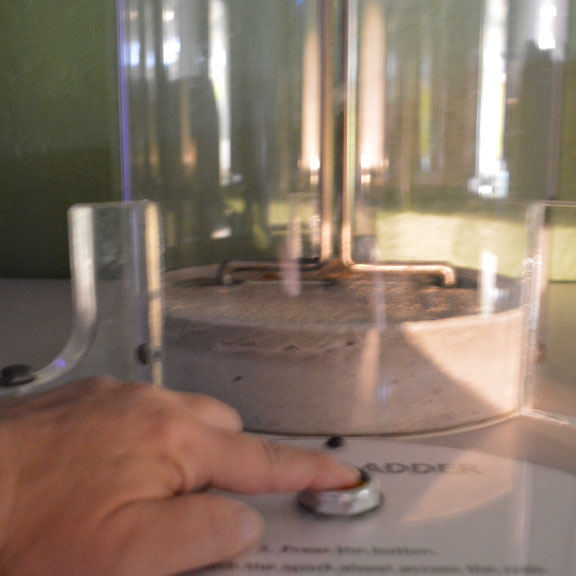
Jacobs Ladder- When electricity flows through the rods, it creates a charge in the air, so electricity jumps from one rod to the other, colliding with molecules in the air, creating a spark. A 15000 volt transformer produces the spark that starts at the bottom of the rods and travels up. Why is the spark traveling up? The spark is very hot, heating the air. Since hot air rises, it carries the spark with it. When the spark reaches the top, the distance between the rods is too great and the spark breaks up and another spark forms at the bottom.
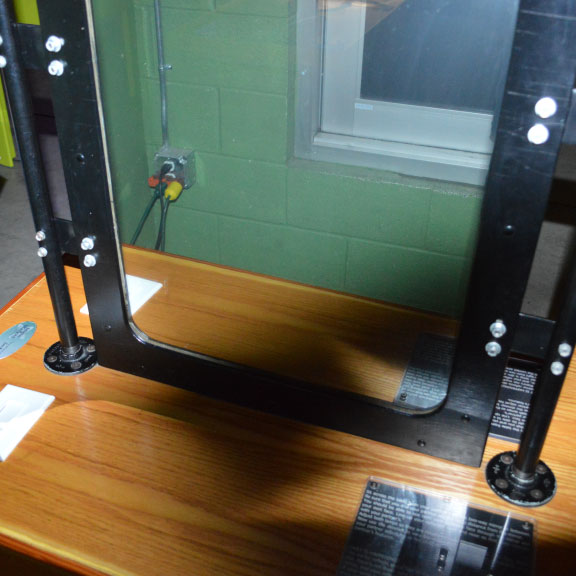
Two-Faced Exhibit- An activity in which two people sit across from each other and observe each other through a dividing, clear barrier. As each participant adjusts the lighting, the image they see changes.
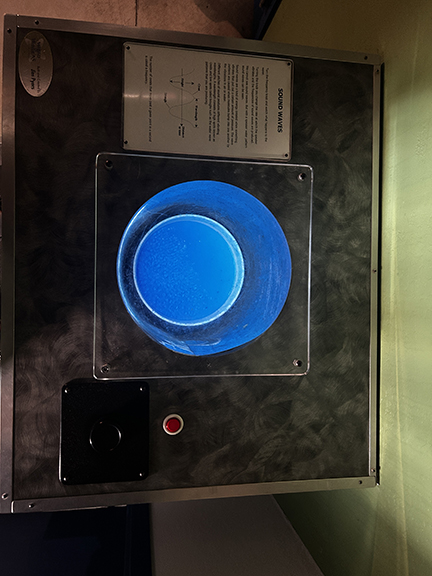
Sound Waves
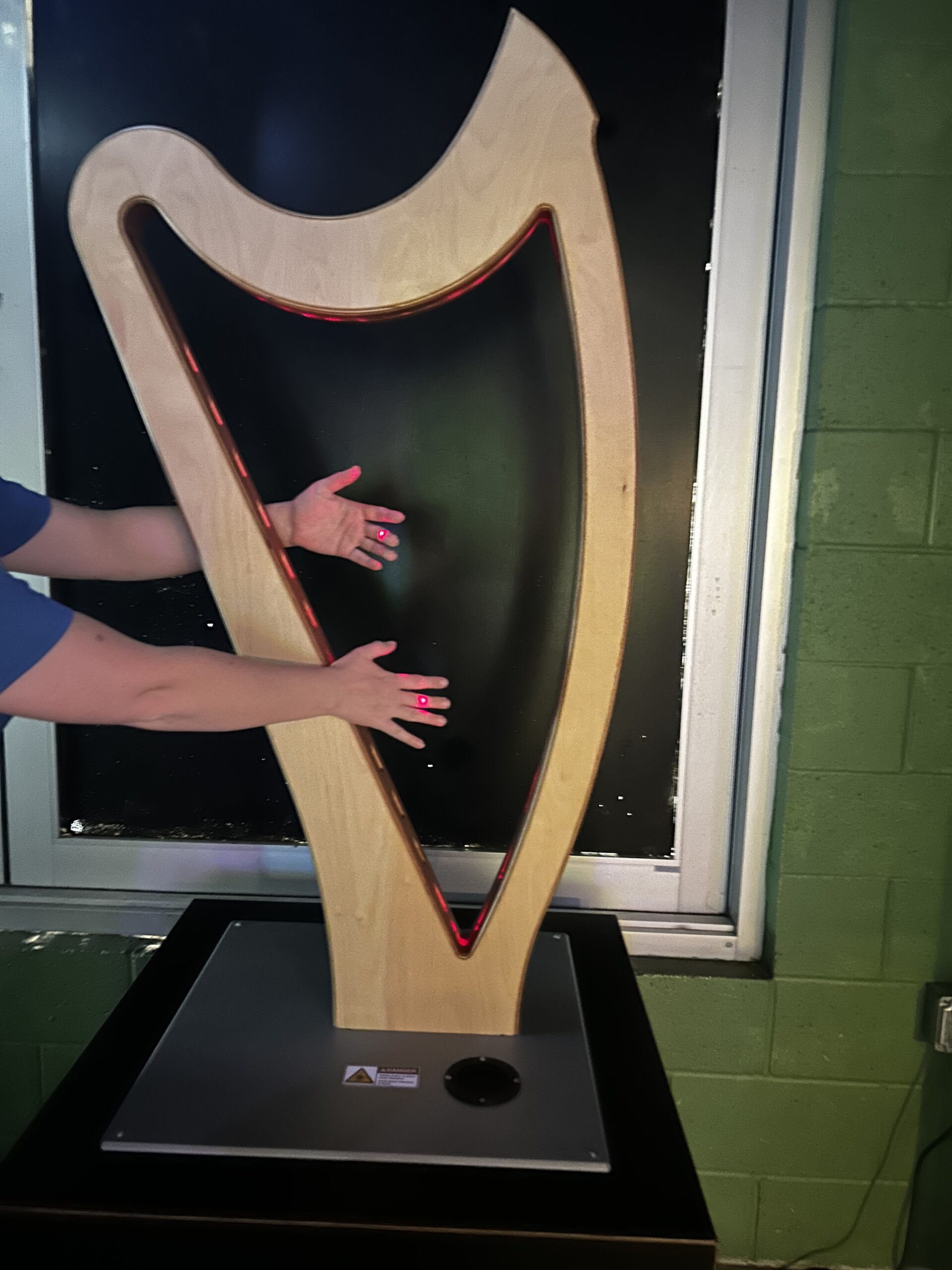
Laser Harp
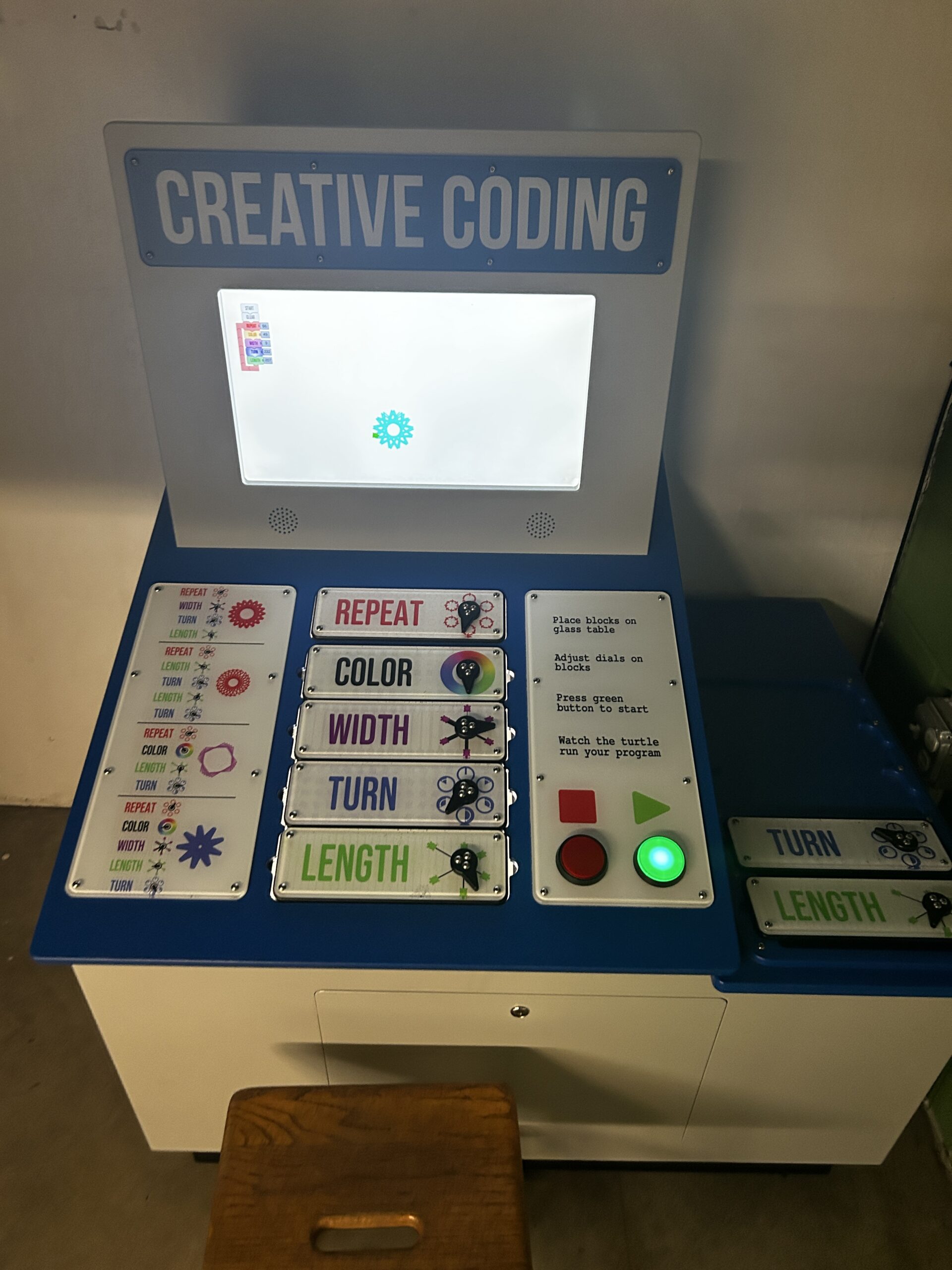
Creative Coding
Exhibits Throughout the Museum
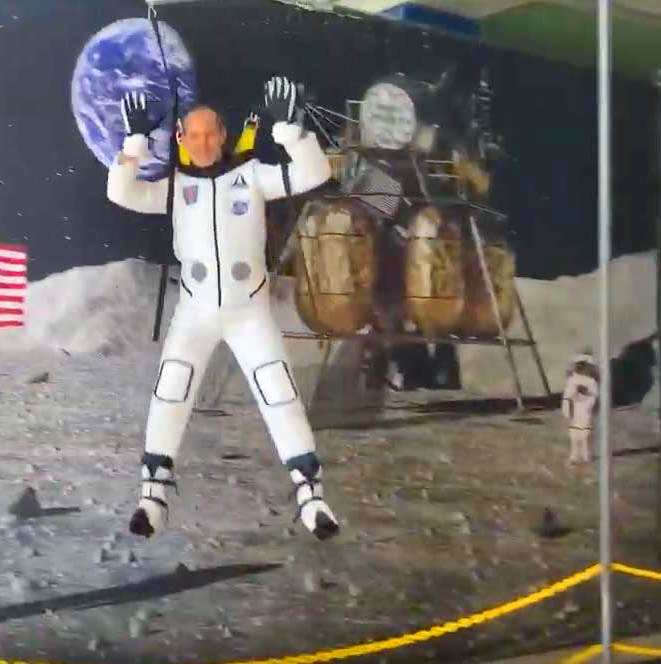
Moon Walk Exhibit: Sponsored by Max and Joan Lee. Exhibit Hours: Thursday-Monday, 11am-noon and 2:30pm-3:30pm, $3 per astronaut
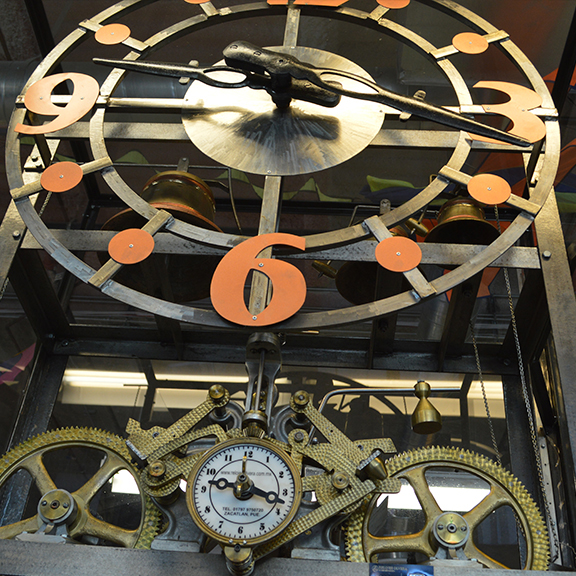
A brass pendulum swings, gears rotate, and bells, a chime in the 9 foot tall clock handmade in Mexico. The clock is a working example of simple machines in action: levers, wheels, axles, and screws.
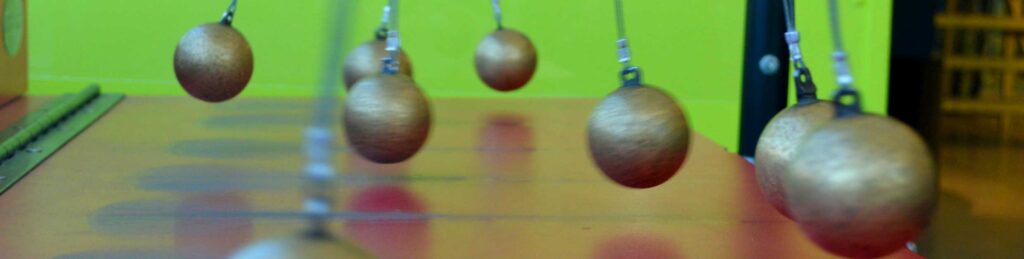
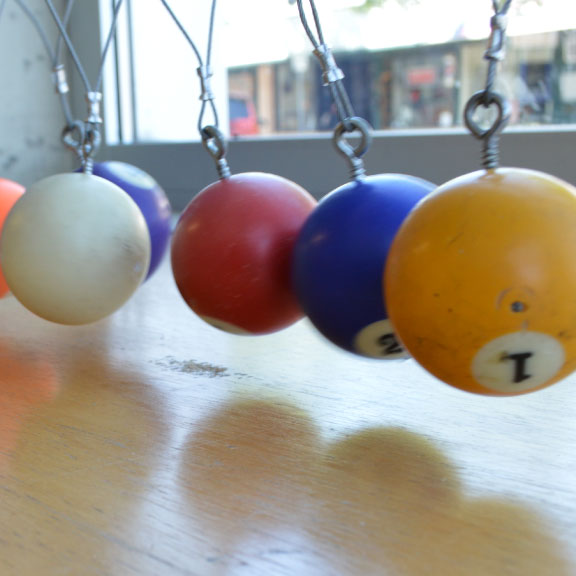
Newton’s Cradle- This exhibit demonstrates the three main physics principles at work: conservation of energy, conservation of momentum and friction using seven billiard balls.
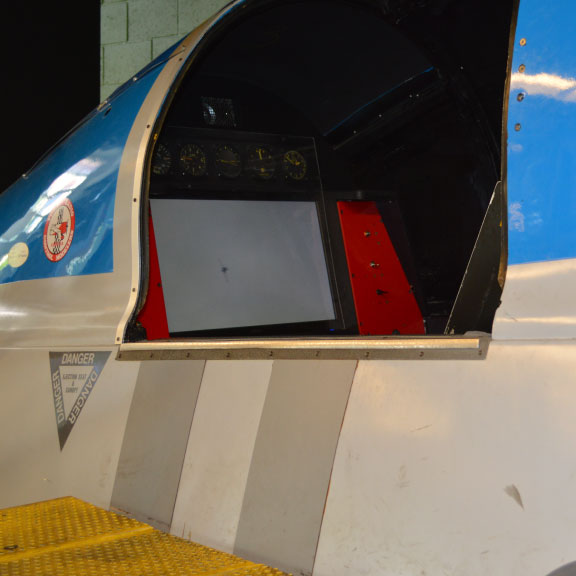
Flight Simulator- Although the video of flight is not actually controlled by the joy stick and switches, this was once an actual Navy F-14 Tomcat static training simulator. EXHIBIT MADE POSSIBLE BY: Bill Meehleis and Tokay RC Modelers
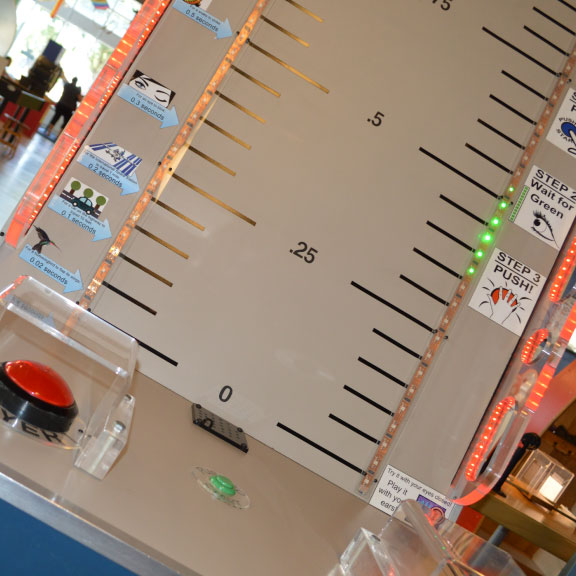
Reaction Time- When a start button is pushed, two competitive players wait for green lights to flash. Then they hit their large red button as fast as possible. The time it took to react is displayed by the LED ruler revealing the winner.
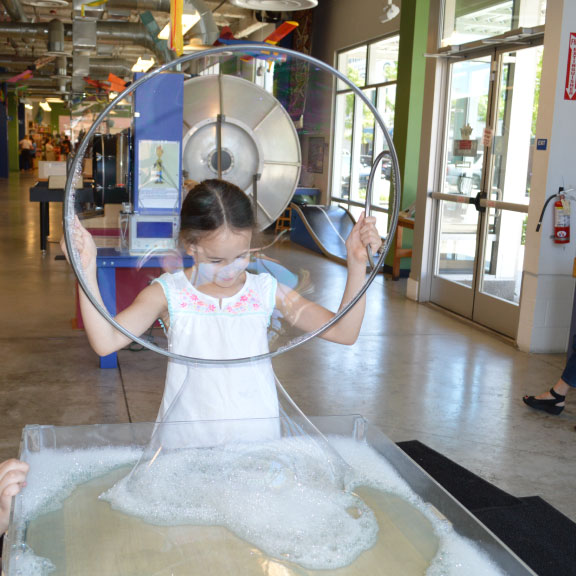
Bubble Table- No one is too old or too young to enjoy making bubbles. Try using different shaped bubble-makers. Does the shape of the bubble blower affect the shape of the bubble? Does the size? What shape is a bubble in the air?
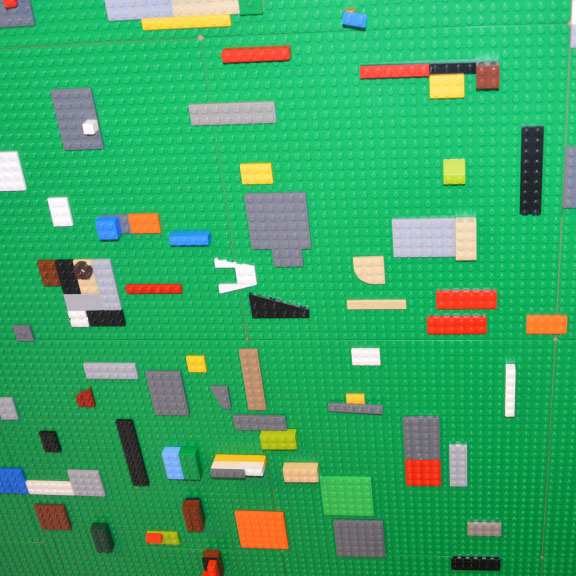
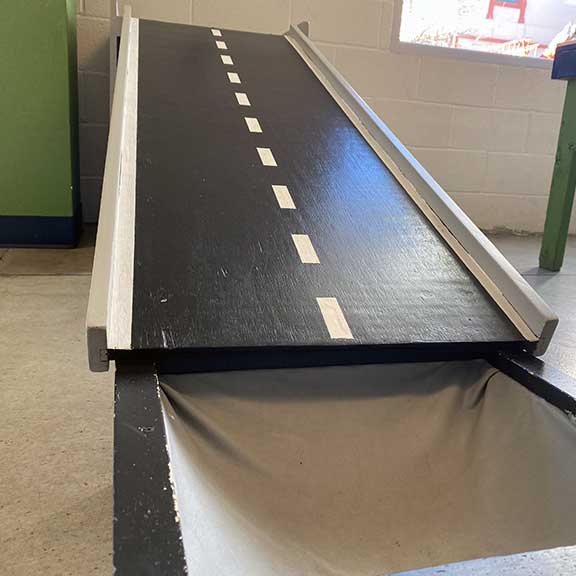
Lego Raceway and Wall- This is a great interactive exhibit where you can construct a Lego race car and race it. How can you build a race car that will go fast, go straight, and not fall apart halfway down the ramp? Learn about friction, engineering, and efficient construction. Plus, there’s a wall of Lego base plates to build upon and extend the creativity! EXHIBIT MADE POSSIBLE BY: Kelly, Shelli, and Billy Brown
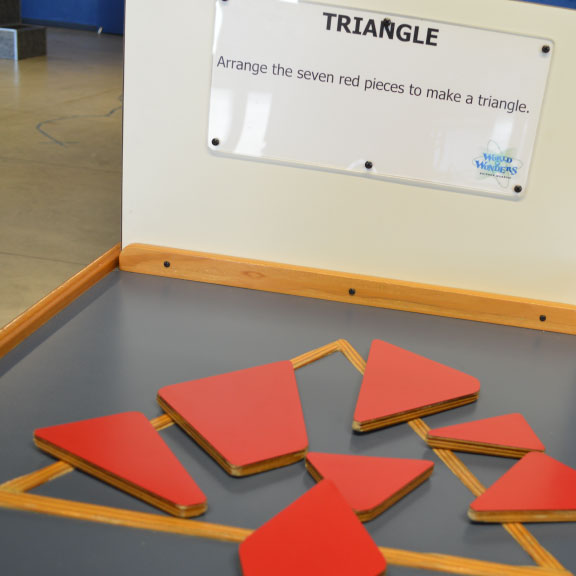
Broken Triangle- There are seven red pieces of this puzzle. Arrange them all inside the wooden frame to form a triangle.
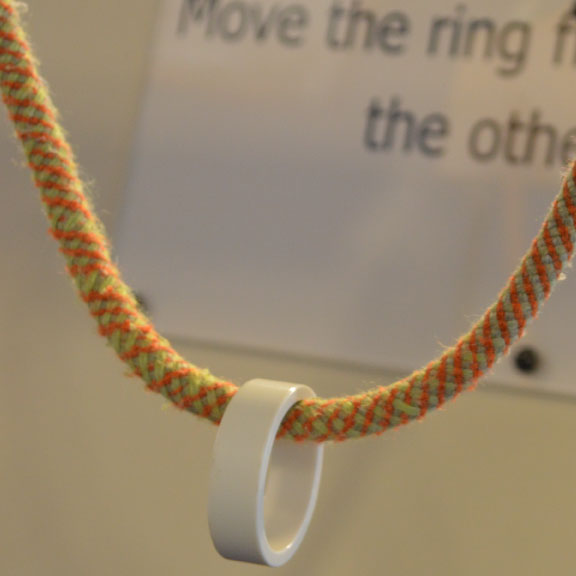
Ring on a Loop- There is one solution to move the ring from one loop on a rope to the other loop of the rope by pulling, crisscrossing, and rearranging parts of this puzzling puzzle.
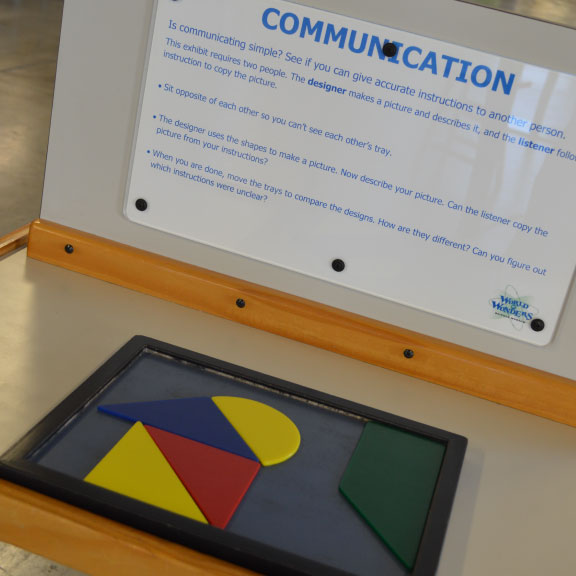
Communication Table- This exhibit involves two people. One person sits on each side of the table. This exhibit encourages clear communication between the two people. The object of the activity is for each person to form the identical designs on their individual trays from triangles, half circles and squares.
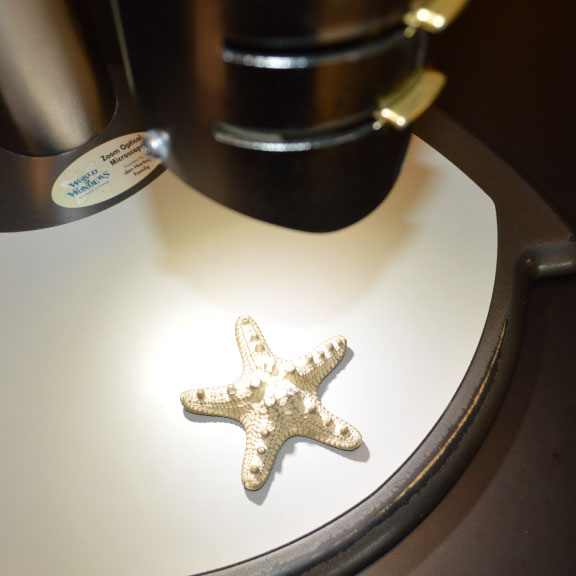
Zoom Optical Microscope- A large microscope that projects onto a screen and allows visitors to look up close at the various available specimens. EXHIBIT MADE POSSIBLE BY: den Hartog Family
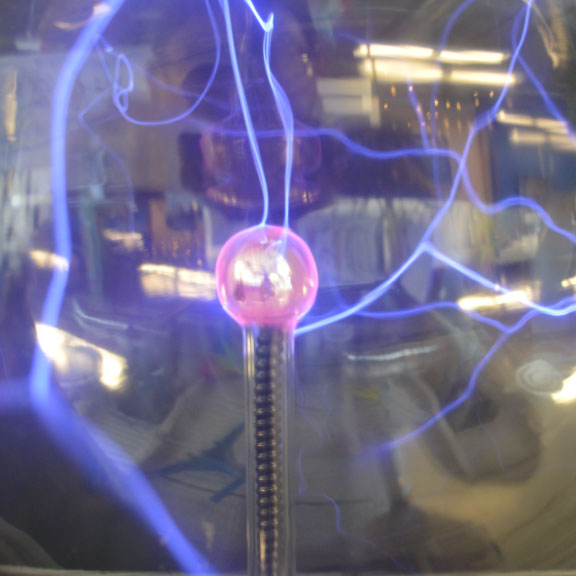
Plasma Ball- A clear glass orb, filled with a mixture of various gases at low pressure that generate high-frequency alternating current. A smaller orb in its center serves as an electrode. Plasma filaments extend from the inner electrode to the outer glass insulator, giving the appearance of multiple constant beams of colored light. Placing a hand near the glass alters the high-frequency electric field, causing a single beam to migrate from the inner ball to the point of contact. EXHIBIT MADE POSSIBLE BY: K.R. and Robbie Hovatter
Plasma Ball- A clear glass orb, filled with a mixture of various gases at low pressure that generate high-frequency alternating current. A smaller orb in its center serves as an electrode. Plasma filaments extend from the inner electrode to the outer glass insulator, giving the appearance of multiple constant beams of colored light. Placing a hand near the glass alters the high-frequency electric field, causing a single beam to migrate from the inner ball to the point of contact. EXHIBIT MADE POSSIBLE BY: K.R. and Robbie Hovatter
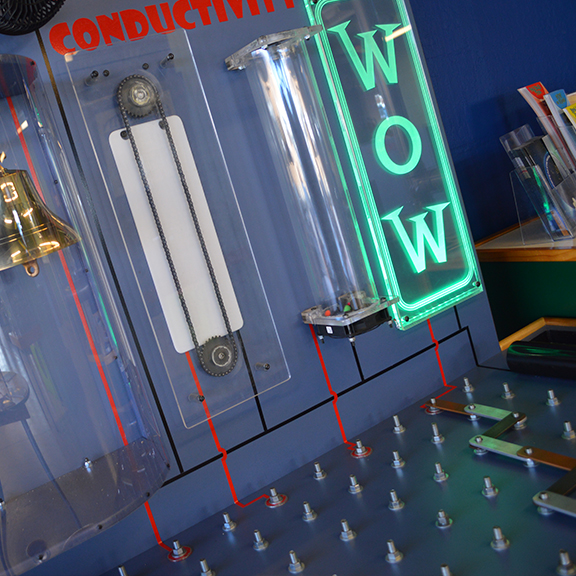
Items that allow electricity to flow through them are termed conductors. Items that do not are termed insulators. Visitors build circles of conductors (circuits) that move electricity to produce light and movement.
Cranium Corner is an exciting interactive exhibit of brain teasing puzzles for kids and adults! Through fundraising and labor, the Leadership Lodi Class of 2014 has created a new exhibit – the Cranium Corner – that offers a selection of interactive activities to challenge the minds of our community.
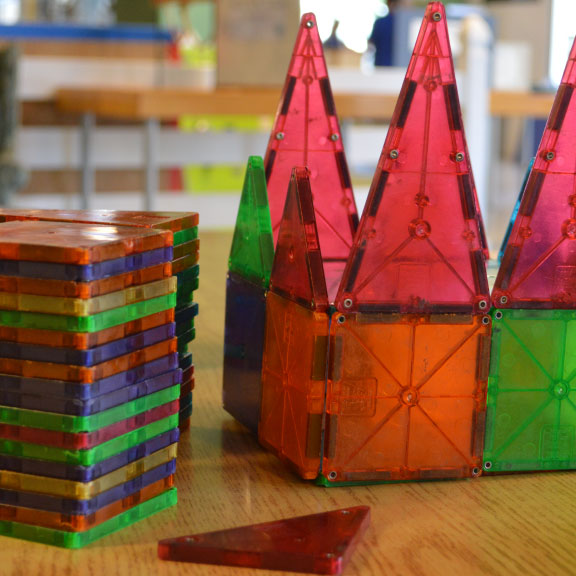
Magna-Tile Play Station- Always a favorite, these plastic tiles can be used to build castles, towers and many other shapes. EXHIBIT MADE POSSIBLE BY: the Hohenrieder Family
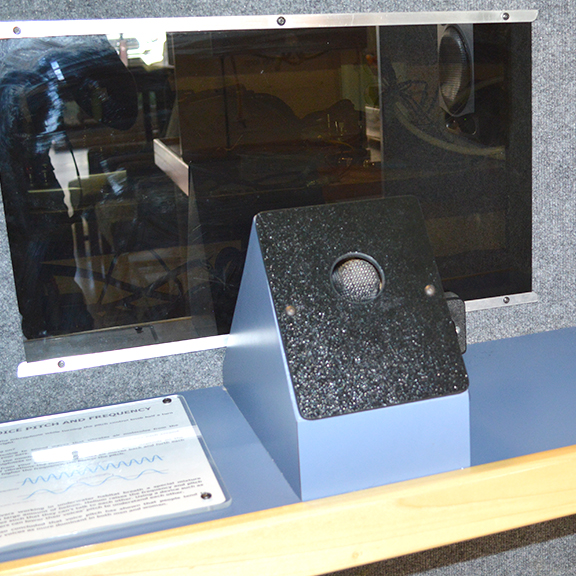
Voice pitch and frequency exhibit.
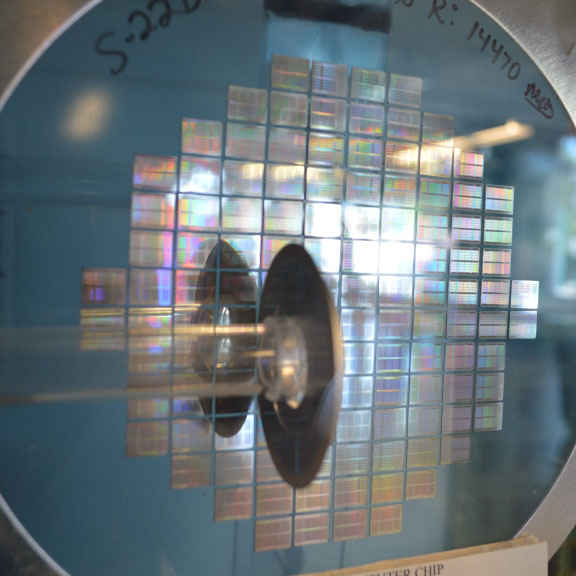
Computer Chip Display- This exhibit shows the evolution of the computer chip.
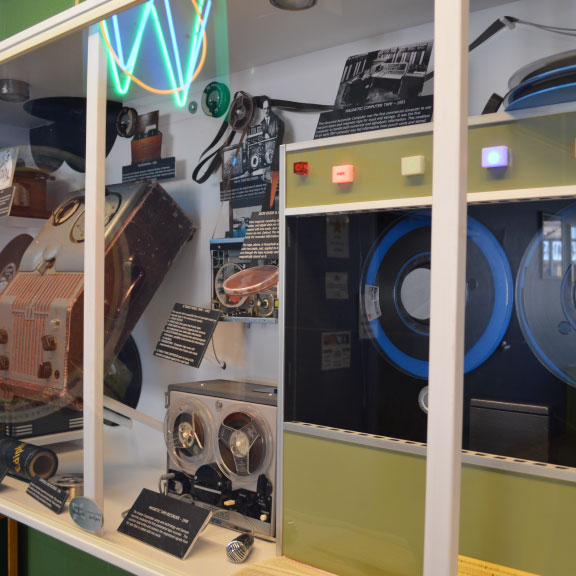
Recording Display- Take a visual walk through the history of recording, starting with listening to the worlds first recording and up through the technological improvements of today.
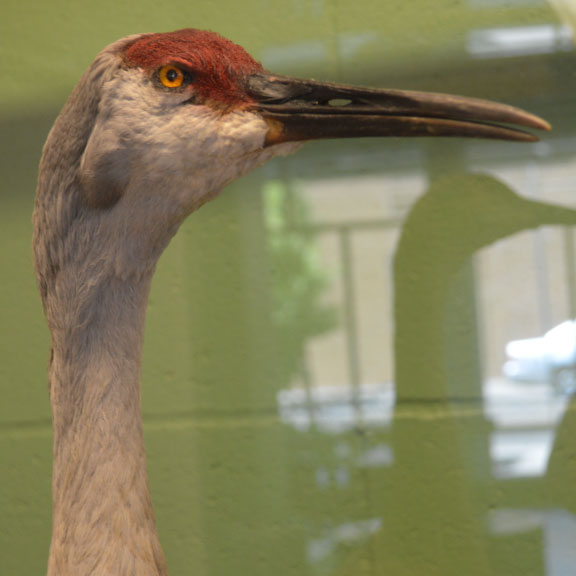
Crane Diorama- This display shows birds and other animals in a natural habitat. Owned by the Crane Festival and Lodi Unified School District
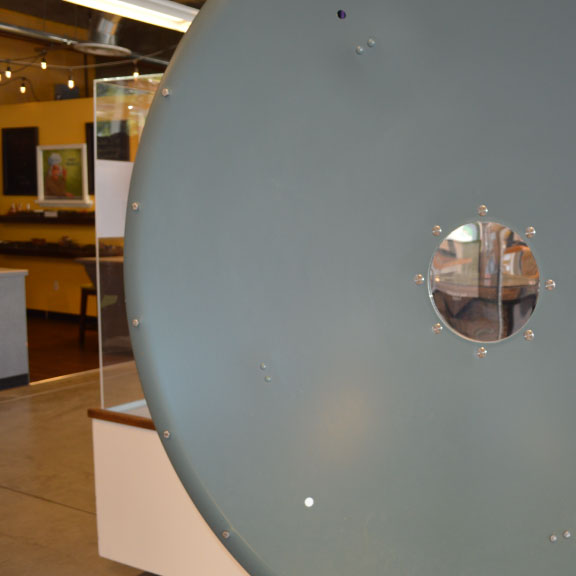
Parabolic Dishes- By facing these dishes, visitors can talk to each other from across the room without even looking at one another.
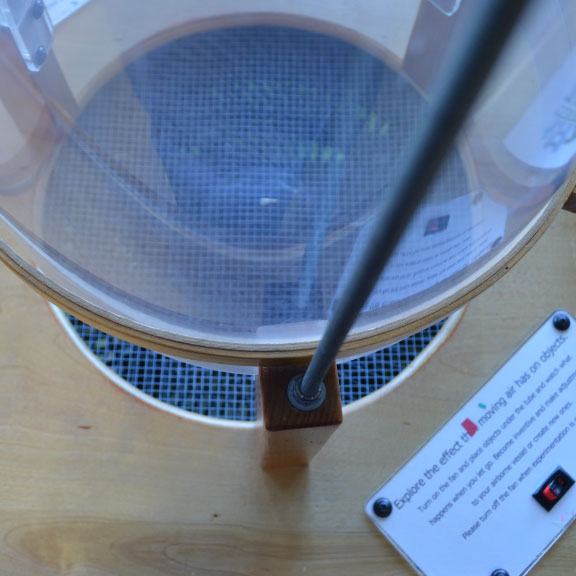
Wind Tube- This is a playful and inventive way to explore airflow, drag, symmetry, turbulence, air resistance, and gravity. By making observations about the ways in which an object behaves in the air tube, new designs can be constructed and immediately tested. Seeing common objects such as strawberry baskets and plastic containers behave in surprising ways leads to unexpected experiments with these things.
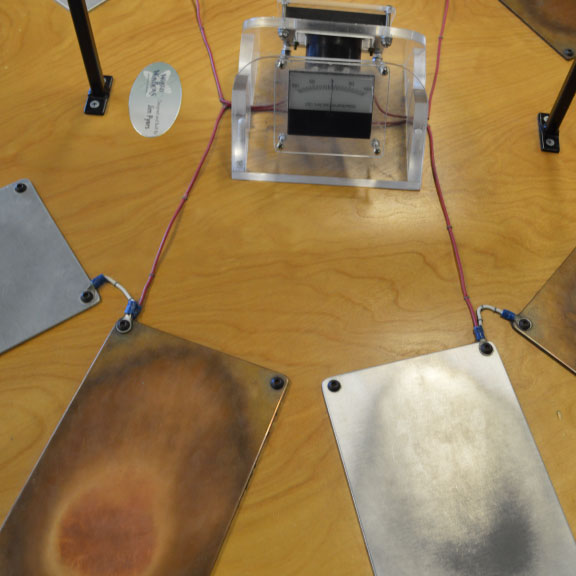
Hand Battery- Placing one hand on a copper plate and the other hand on an aluminum plate will demonstrate that electrons can move through your body to complete a circuit. The amount of electric current that flows through you can be observed on a meter.
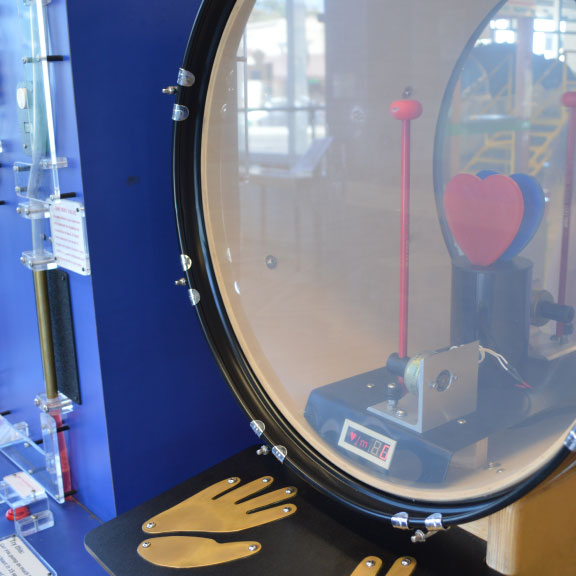
Listen to your Heart- By placing your hands gently on the brass hand prints, this exhibit senses the tiny electrical signals of each pulse of your heart beat. Your heart pumps blood throughout your body. Your heart beat per minute (bpm) can vary as the body needs oxygen, such as during exercising. EXHIBIT MADE POSSIBLE BY: General Mills
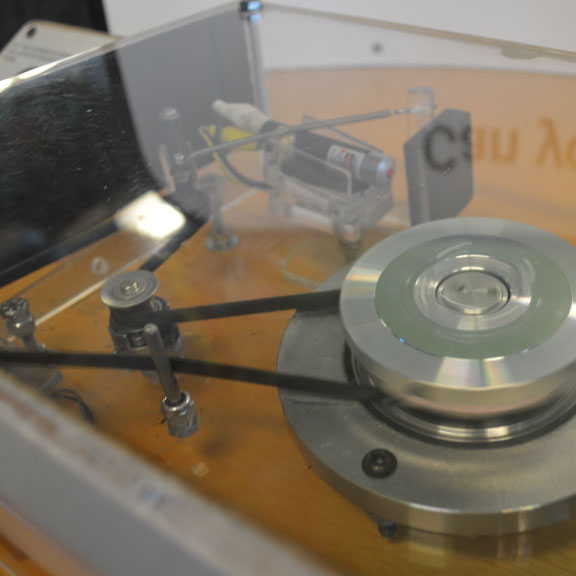
Can You See Your Voice- Since your voice produces vibrations of sound waves through air molecules, you will be able to see your voice with this exhibit. With help of mirrors, a diaphragm and a laser you will be able to see patterns of your voice on a screen.
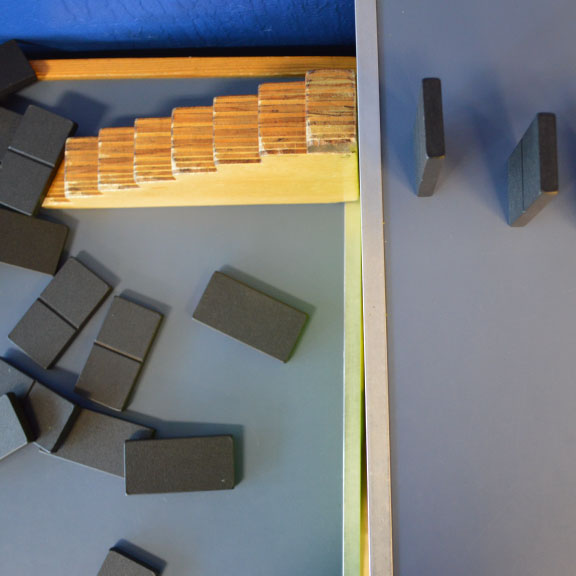
Speed Dominoes- If you want your dominoes to fall faster, should you set them closer together or farther apart? If you give more force to the first domino, will they all fall faster? This exhibit provides the opportunity to experiment with dominoes and an accurate digital timer to discover variables of kinetic energy.
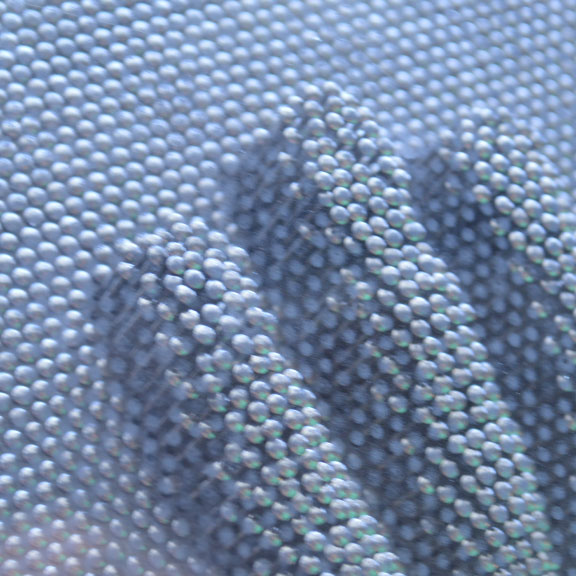
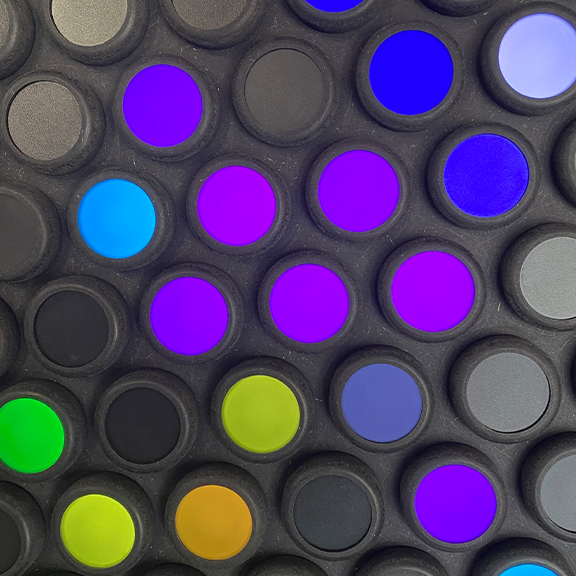
Pin Art- A large multitude of pins are suspended in a frame. By pushing a hand or other items up on the pins from the underside of the frame, the shape of the item is revealed. Two sizes of pins show differences in pixel resolution.
Listen to your Heart- By placing your hands gently on the brass hand prints, this exhibit senses the tiny electrical signals of each pulse of your heart beat. Your heart pumps blood throughout your body. Your heart beat per minute (bpm) can vary as the body needs oxygen, such as during exercising. EXHIBIT MADE POSSIBLE BY: General Mills
This exhibit consists of three large mirrors joined at a 60 degree angle. Each mirror reflects the images of the other two. These multiple reflections create the impression of a crowd of people and a myriad of lights.
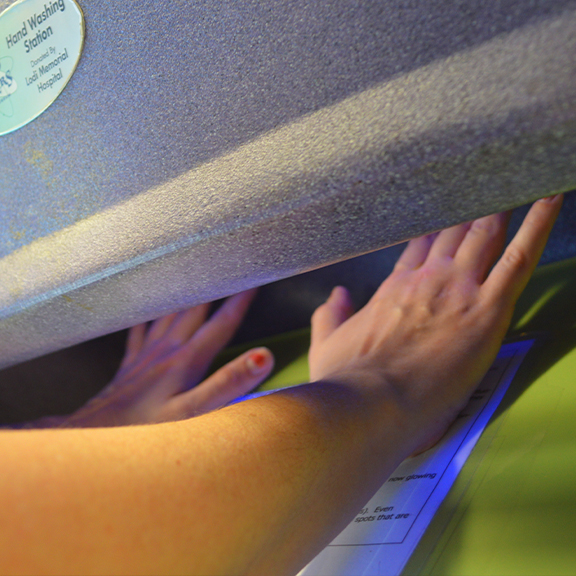
Germs are very small organisms that can cause sickness. Washing hands well can help keep a person healthy. Visitors put lotion on their hands, wash their hands, and then place their hands under a UV light which shows how well the hands were actually washed.
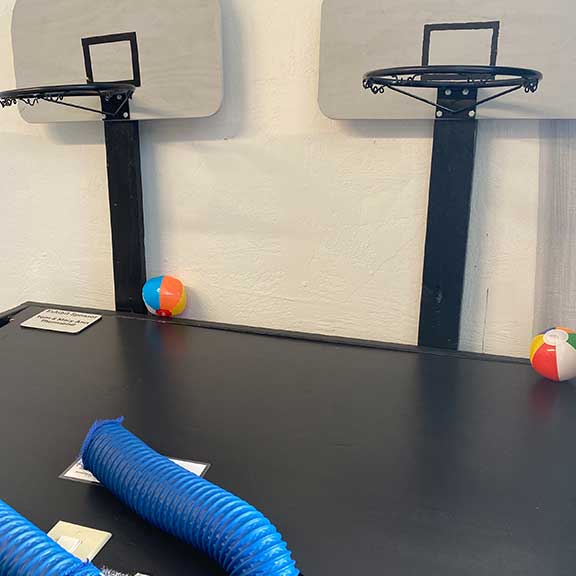
Bernoulli Principle – Description- A plastic beach ball floats on a stream of air blowing out of the cone. If the ball is pulled slowly out of the stream of air, a force is felt trying to pull the ball back into the air stream. If the cone is bent to the side, the ball can be suspended in space off to the side of the cone. The ball is strongly held in the lower pressure stream of air. Try This- Take the blue tube and try and use the airflow to make the ball into the basket. Basketball Bernoulli Principle Donated By: Vacaville’s Imagine That Museum
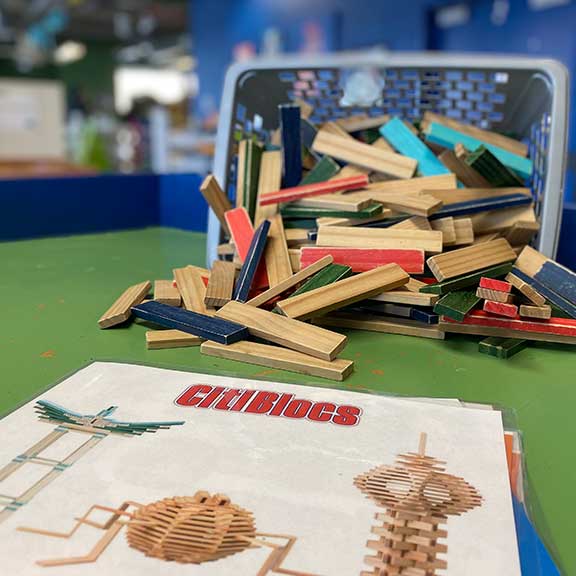
What can you build? Citiblocs are high-quality natural wooden construction blocks that inspire both traditional buildings and modern designs. The secret behind Citiblocs is that every block is the same size, shape, and weight, and is precision cut so that it can stand up on any side.
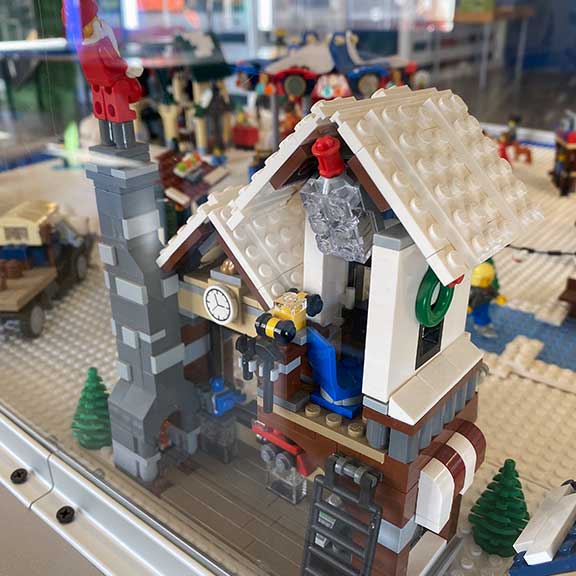
Sirius XM Radio host of “The Dr. Laura Program” recently donated her collection of personally hand-assembled Lego sets to the museum.
A ramp, also known as an inclined plane is a flat supporting surface tilted at an angle that allows easy elevation and de-escalation on the slanted slope. Force and motion along with gravity affects the speed and velocity the car travels.
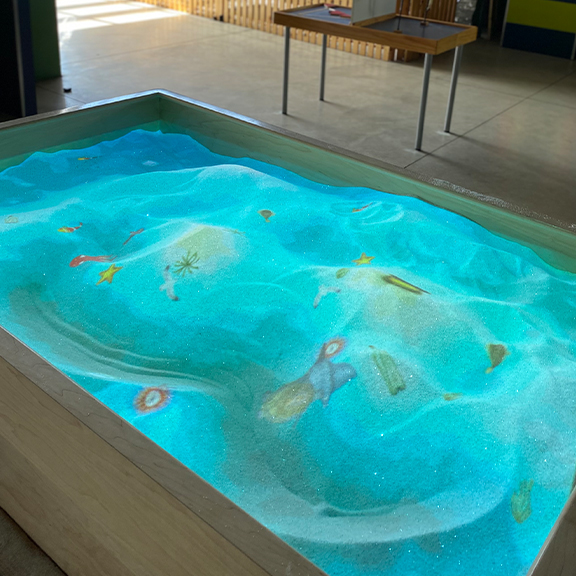
Sand Table – create moving rivers, lakes and mountains and you move the sand. EXHIBIT MADE POSSIBLE BY: K.R. and Robbie Hovatter
Interactive Everbrite Exhibit, create unique shapes and images by turning the nobs. EXHIBIT MADE POSSIBLE BY: Raymus Foundation